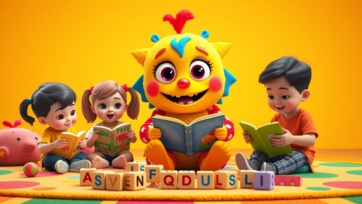
Critical thinking is a vital skill that helps children analyze information, solve problems, make decisions, and think creatively. Developing these skills early in life sets the stage for academic success and lifelong learning. Parents and caregivers can encourage critical thinking through fun, engaging, and hands-on activities that make learning interactive and enjoyable. This guide provides practical strategies and activities to help preschool and kindergarten kids enhance reasoning, problem-solving, and decision-making skills.
Why Critical Thinking is Important for Kids:
Critical thinking equips children with essential skills for navigating the world:
-
Solve problems independently
-
Understand cause-and-effect relationships
-
Make informed decisions
-
Enhance creativity and imagination
-
Build confidence in learning and social situations
Early experiences that challenge thinking and encourage curiosity help children develop strong cognitive skills. Educational platforms like https://learn-kids.com offer excellent guidance for parents to nurture critical thinking in everyday life.
Hands-On Problem-Solving Activities:
Practical, hands-on experiences engage children and enhance reasoning skills:
Building Challenges:
Provide blocks, LEGO, or magnetic tiles and ask children to build a structure with specific requirements (e.g., tallest tower or bridge). This teaches planning, spatial reasoning, and creative problem-solving. Check https://kidtoys.site for suitable building toys.
Puzzle Solving:
Simple jigsaw puzzles, shape sorters, and logic boards challenge children to think critically and recognize patterns.
DIY Obstacle Courses:
Set up a safe indoor or backyard course with instructions like “go around the chair, hop twice, then crawl under the table.” This promotes sequencing, planning, and decision-making.
Memory and Observation Games:
Observation and memory strengthen analytical thinking:
Matching and Sorting Games:
Create cards or objects to sort by color, shape, or size. Ask children to explain their choices to enhance reasoning.
“I Spy” Challenges:
Use surroundings for “I Spy” games. Encourage kids to spot details and recall information, improving attention and analytical thinking.
Story Recall:
Read a short story and ask children to retell it in their own words. This enhances memory, comprehension, and sequencing skills.
Creative Arts to Stimulate Critical Thinking:
Art encourages exploration, experimentation, and problem-solving:
Drawing with Prompts:
Give children prompts like “Draw a house that floats in the sky” or “Create a new animal.” Ask them to explain their choices to develop reasoning and imagination.
Craft Projects:
Encourage making crafts using limited materials. Children must plan, evaluate, and execute ideas, fostering decision-making and creativity.
Playdough Challenges:
Ask children to create specific shapes, animals, or objects. Problem-solving during modeling enhances spatial thinking and fine motor skills. Educational craft ideas are available at https://boobacartoon.com.
Math and Logic Activities:
Math is a natural way to promote critical thinking:
Pattern Recognition:
Create sequences with blocks, beads, or stickers. Ask children to continue or replicate the pattern, fostering logical reasoning.
Simple Word Problems:
Use toys or snacks to introduce story-based addition and subtraction problems. Example: “You have 4 apples and give 2 to your friend. How many left?”
Sorting and Classifying:
Sort items by multiple attributes, such as color and size, to encourage analytical thinking.
Storytelling and Questioning for Reasoning:
Language and storytelling improve critical thinking and comprehension:
Interactive Reading:
Read books aloud and ask questions like “Why do you think the character did that?” or “What would you do in this situation?”
Create Your Story:
Encourage children to make up stories with toys, puppets, or drawings. Ask them to explain choices and outcomes, which develops reasoning skills.
Rhymes and Problem Songs:
Songs like “Five Little Monkeys” or “If You’re Happy and You Know It” can be turned into problem-solving exercises. Animated versions are available at https://keekan.com.
Outdoor Activities for Critical Thinking:
Outdoor play offers natural opportunities for decision-making and problem-solving:
Nature Exploration:
Ask children to observe the environment and make predictions. Example: “What do you think will happen if it rains today?”
Scavenger Hunts:
Provide clues requiring logic and observation to find objects. This enhances problem-solving and critical thinking.
Team Games:
Games that involve rules, strategies, or collaboration, like building sandcastles or treasure hunts, promote analytical thinking and social reasoning.
Sensory Play for Decision-Making:
Sensory activities engage multiple senses and enhance cognitive flexibility:
Water and Sand Experiments:
Let children pour, measure, and explore textures. Introduce simple “What if” questions to encourage experimentation.
Sensory Bins:
Hide objects in rice, beans, or pasta. Ask children to find and categorize them, combining tactile exploration with reasoning.
Texture Sorting:
Use fabrics, leaves, or other materials to explore, sort, and classify by texture, weight, or color.
Using Educational Technology:
Educational apps and websites can reinforce critical thinking through interactive learning:
-
https://learn-kids.com – Logic games, memory activities, and reasoning exercises
-
https://keekan.com – Animated problem-solving videos and songs
-
https://boobacartoon.com – Interactive learning cartoons for reasoning and creativity
-
https://kidtoys.site – Toys that develop problem-solving, planning, and spatial thinking
Tips for Parents to Foster Critical Thinking:
Parents’ support is key to developing reasoning and problem-solving skills:
-
Encourage questions and curiosity
-
Allow children to explore solutions independently
-
Praise effort, creativity, and persistence
-
Make learning playful and interactive
-
Integrate critical thinking into daily routines
Conclusion: Building Smart, Curious Thinkers:
Critical thinking is a vital skill that grows through play, exploration, storytelling, and hands-on problem-solving. By incorporating activities like puzzles, memory games, math challenges, storytelling, sensory play, and outdoor adventures, parents can help children develop reasoning, decision-making, and creative thinking skills.
Use educational toys from https://kidtoys.site, craft ideas from https://boobacartoon.com, and interactive songs from https://keekan.com to make learning fun, playful, and educational. Supporting critical thinking in early childhood lays the foundation for confident, curious, and capable learners.